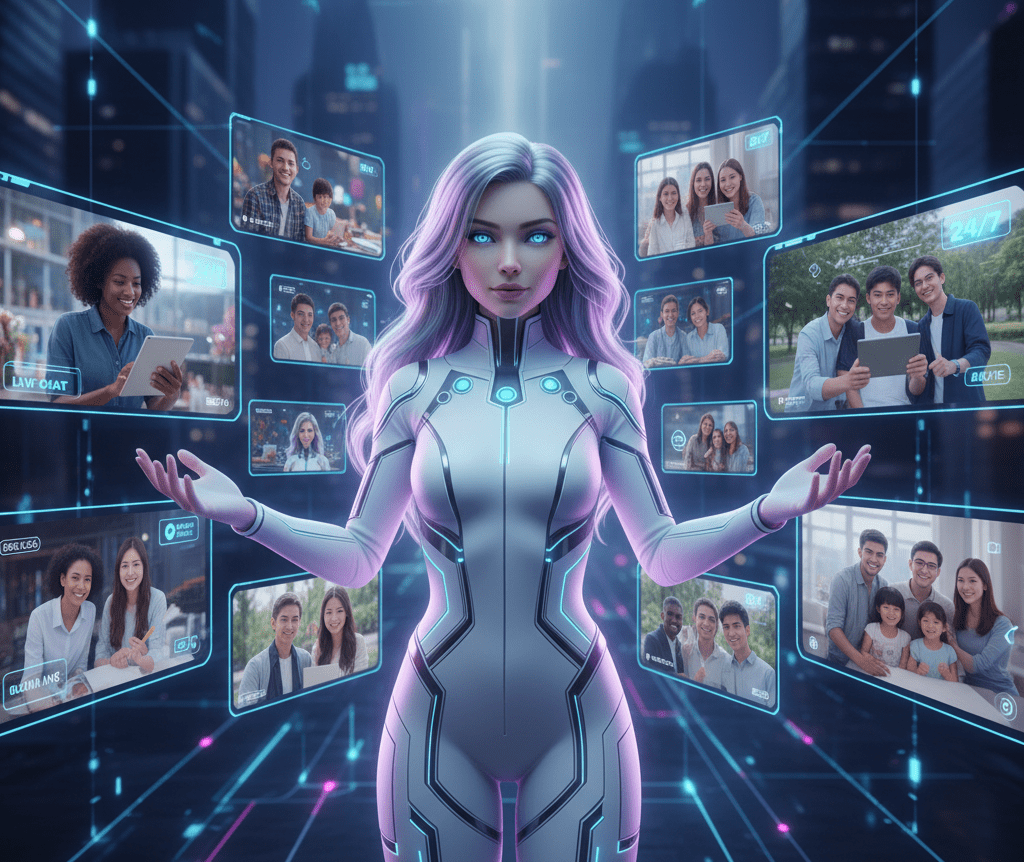
In the fast-changing world of digital marketing, AI avatars have emerged as the newest buzz. From hyper-realistic virtual humans to animated brand mascots powered by AI, these avatars are reshaping how brands connect with their audiences.
But here’s the big question: Will AI avatars eventually replace human influencers? Or will they simply become another powerful tool in the marketing mix?
Let’s dive deeper.
What Are AI Avatars?
AI avatars are computer-generated personalities designed to look, act, and even think like humans. Thanks to advanced technologies like generative AI, 3D modeling, and machine learning, brands can now create digital characters that:
- Appear lifelike on video and social media.
- Speak multiple languages.
- Adapt expressions, tone, and body language.
- Interact with followers in real time.
Examples? Lil Miquela, a virtual influencer with over 2M Instagram followers, and AI brand avatars like Prada’s Candy or Samsung’s Sam.
Why Are Brands Using AI Avatars?
There are several reasons why AI avatars are gaining momentum:
- Consistency – Unlike human influencers, AI avatars never age, get tired, or change their brand values.
- Cost Efficiency – After the initial investment, brands can save on recurring influencer fees.
- Global Reach – AI avatars can speak multiple languages, reaching diverse audiences at scale.
- Creative Freedom – They can wear any look, appear anywhere, and do anything without real-world limitations.
- 24/7 Engagement – With AI chat and automation, avatars can interact with fans anytime.
In short, AI gives brands full control over their brand ambassador.
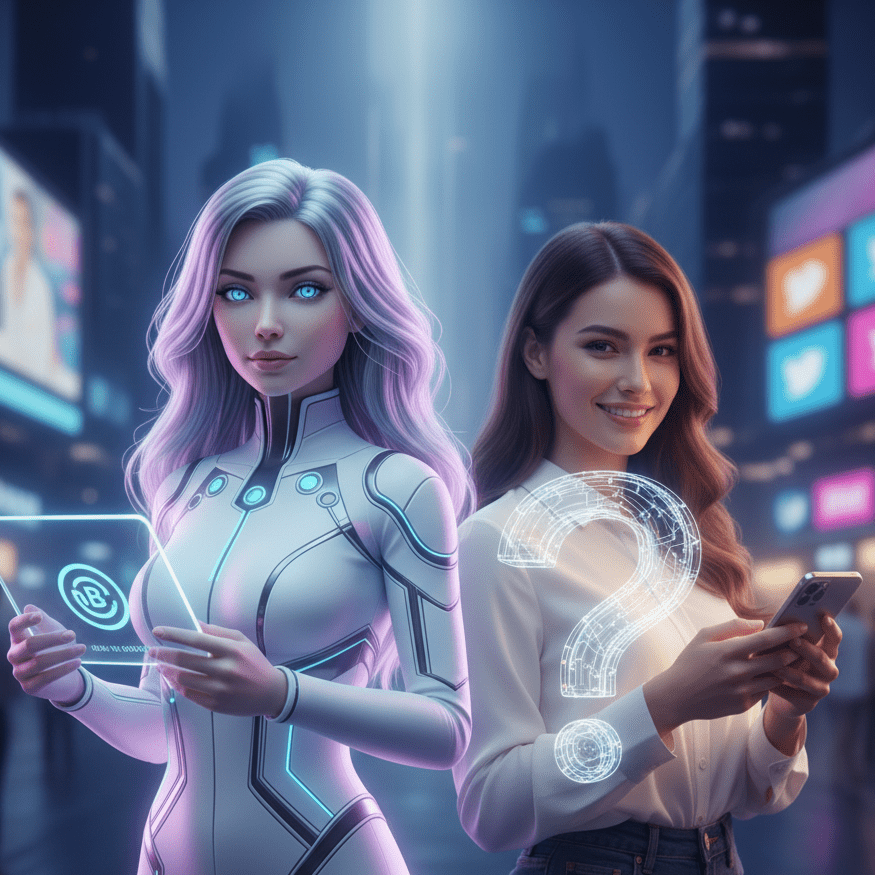
Can AI Avatars Replace Human Influencers?
Here’s where the debate gets interesting.
Why They Might Replace Influencers:
- Perfect Brand Fit – No risk of scandals or off-brand behavior.
- Scalable Content – AI avatars can generate hundreds of posts in minutes.
- Data-Driven Personalization – They can adapt content instantly based on audience insights.
Why They Won’t Replace Humans Entirely:
- Lack of Authenticity – Audiences crave real stories and human emotions.
- Trust Factor – People follow influencers because they relate to their lives, struggles, and personalities.
- Community Building – AI can mimic conversation, but true empathy and lived experiences are hard to replicate.
In fact, a recent survey shows that while people find AI avatars fascinating, they still prefer human recommendations when it comes to trust and purchase decisions.
The Future: Humans + AI Together
Instead of replacing influencers, the real future lies in collaboration between human influencers and AI avatars.
- Hybrid Campaigns: Brands may pair an AI avatar with a real influencer to create fresh, futuristic campaigns.
- AI Assistants for Influencers: Influencers could use AI clones to scale their content output while maintaining authenticity.
- New Storytelling Formats: Avatars can bring imagination to life, while humans keep it relatable.
This hybrid model could give brands the best of both worlds, authenticity from humans and innovation from AI.
What This Means for Brands
For marketers, the rise of AI avatars isn’t a threat, it’s an opportunity. By combining influencer marketing with AI-driven creativity, brands can:
- Experiment with futuristic campaigns.
- Expand into new markets faster.
- Stay relevant in a tech-savvy digital culture.
At Rayfix Media, we believe the winners will be the brands that embrace AI without losing their human touch.
Final Thoughts
AI avatars are here to stay, and their impact on the influencer industry is undeniable. But instead of replacing influencers completely, they will likely co-exist and collaborate, creating a richer and more dynamic digital ecosystem.
Because at the end of the day, audiences may enjoy engaging with a virtual avatar, but they still trust the real human experience.The future isn’t human or AI. It’s human + AI.